 Pompano Beach · Chimney Guide
Broward's storm season runs June through November, and every forecast cone that brushes South Florida sends homeowners hunting for plywood and bottled water. The chimney rarely makes that preparation list, yet it is the tallest thing on the roof and the first structure a gust grabs hold of. An hour of attention in May spares a world of grief in September.
Wind speed climbs with height, so the stack pokes into faster air than any other piece of the house. A hurricane does not simply push against it; airflow accelerates around the top and generates uplift, prying at caps, chase covers, and anything else held down by a few aging fasteners. Rain arrives horizontally at the same time, hammering faces and joints that ordinary showers never touch, and an uncovered flue becomes a funnel delivering gallons of water straight down to the firebox and the framing wrapped around it.
The aftermath tells the story every year. After a serious blow, the calls that reach us most often involve caps discovered in the pool or a neighbor's yard, chase covers peeled back like sardine tins, flashing lifted just enough to leak invisibly, and crowns that cracked open while the structure flexed. None of these begin as dramatic failures. Nearly every one starts as a loose edge or a hairline gap that a calm-weather check would have caught, which is exactly why the walkaround described below is worth an hour of anyone's time.
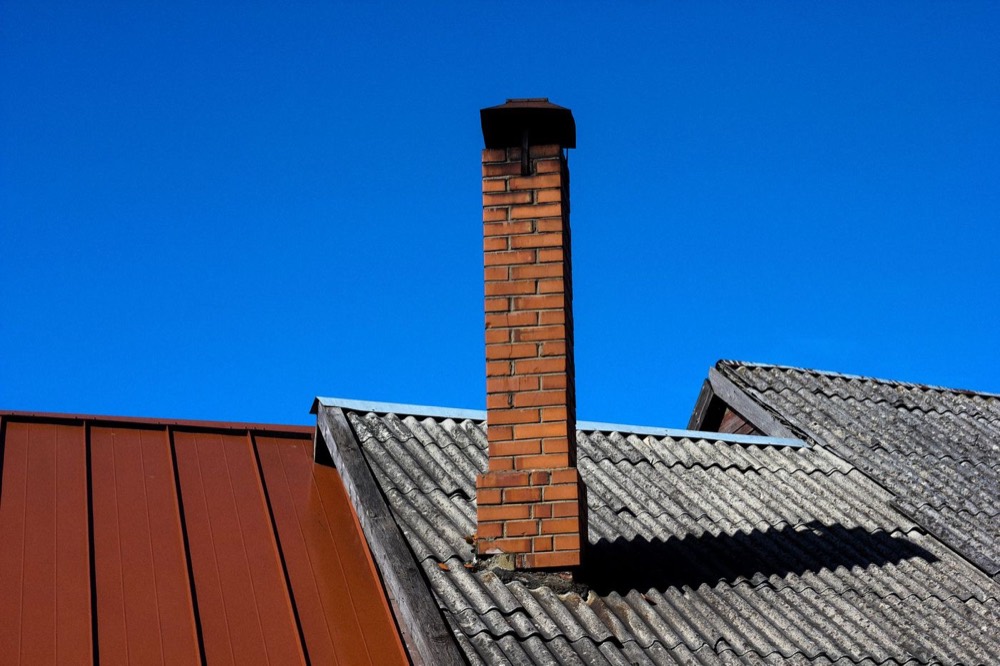
Start across the street with binoculars. The cap should sit level, its screen intact and its edges tight, with no daylight showing where it meets the flue. On a framed chase, watch for cover corners curling upward, rust trails, or ripples suggesting the metal has loosened. Follow the flashing line where the stack meets shingles or tile; any lifted lip, missing sealant, or exposed fastener head is a leak waiting on weather. Finally, sight along the stack itself for lean, stair-step cracking, or patched stucco that might be hiding movement.
Then widen the circle. Coconut palms and ficus limbs overhanging the roof become battering rams in a storm, so anything within striking distance of the chimney should be trimmed long before a watch is issued. Loose pavers, patio umbrellas, and grill covers turn into projectiles that chip masonry and dent covers. Inside, swing the damper open and shut to confirm it seats, and sweep a flashlight across the attic framing at the chimney penetration looking for old stains, because a storm will find and enlarge any path water has used before.
With a system inbound, focus on quick wins. Confirm the cap's fasteners are snug rather than merely present, because hand-tight beats missing once the gusts start prying. Shut the damper completely to close the easiest water route into the house, and latch any glass doors at the fireplace opening. If a cap or cover is already loose and no help can arrive in time, taking it down and sealing the flue opening temporarily beats letting the wind turn it into shrapnel over the neighborhood.
Resist any urge to improvise on the roof while conditions deteriorate; no chimney part is worth a fall, and tarps flogged by tropical gusts rarely stay put anyway. Spend the final calm hours documenting instead: walk the property and record the chimney's pre-storm condition in notes and images taken from ground level. If damage does occur, that record makes the conversation with your coverage provider dramatically smoother, because you can demonstrate exactly what changed and when it changed.
Once it is safe outside, repeat the binocular tour. A missing or tilted cap, a peeled cover, or debris jammed into the flue opening all deserve prompt attention, because the next ordinary thunderstorm will exploit whatever the hurricane opened up. Indoors, run a flashlight over the ceiling near the chimney and around the firebox, hunting for new stains, drips, or a damp mineral smell. Water that entered during the storm keeps migrating for days afterward, so check again the following week even when the first pass looks clean.
Sort your findings into now and soon. An exposed flue or a displaced cover is a now: rain enters with every shower, and wildlife move in remarkably fast. Hairline crown cracks and slightly lifted flashing are soons that belong on next month's list, before another system spins up off Africa. Our emergency line stays answered around the clock through the season, and same-day visits are often possible in the days after a storm, when getting the roofline watertight matters most.
Free written quote · Same-day service available · No hidden fees
Closed, always. An open damper hands the storm a direct pipe into your living room. Rain driven down the flue can flood the firebox, soak the hearth, and wick into surrounding drywall before anyone notices.
Full collapses are rare and usually involve a stack already weakened by cracks, rusted reinforcement, or long-neglected mortar. Wind exploits existing flaws far more than it creates new ones, which is why the pre-season check matters so much.
Seal the top temporarily as soon as conditions allow and keep the damper shut. Then arrange a proper replacement quickly; an exposed flue in the rainy season invites water, raccoons, and nesting birds in short order.
New Pompano Beach customers — locked in automatically when you send this form.